
Introduction
If you enjoy fishing in cold, clear rivers, you have probably encountered the mountain whitefish. While it often lives in the shadow of more famous species like trout, this fascinating freshwater fish offers exciting fishing opportunities and plays an important role in river ecosystems.
The mountain whitefish is widely distributed across North America, particularly in cold mountain streams and rivers. Anglers appreciate it for its aggressive feeding behavior, strong fight on light tackle, and accessibility throughout the year.
In this guide, you’ll learn everything you need to know about mountain whitefish—from identification and habitat to the best fishing techniques and common mistakes anglers should avoid.
What Is a Mountain Whitefish?
The mountain whitefish (Prosopium williamsoni) is a freshwater species belonging to the salmonid family, which means it is closely related to salmon, trout, and grayling.
Despite its modest appearance, this fish is an essential part of river ecosystems and provides excellent sport fishing, especially during colder months when trout activity slows down.
Key Characteristics
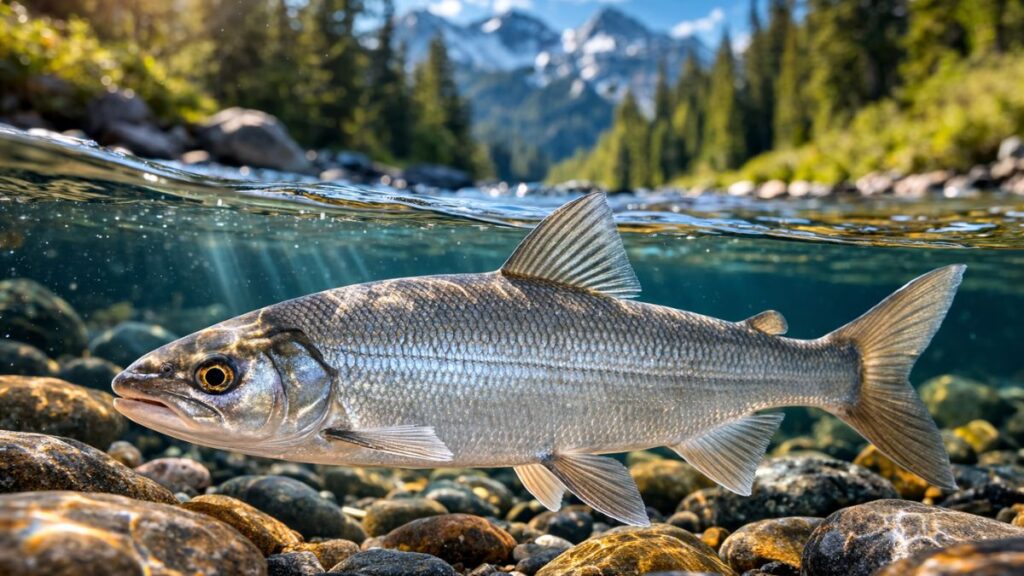
Mountain whitefish have several distinct features that help anglers identify them.
Physical traits include:
-
Slender, torpedo-shaped body
-
Silvery-white coloration
-
Small mouth positioned under the snout
-
Large scales compared to trout
-
Forked tail
-
Usually 10–16 inches long
Unlike trout, their mouth faces downward, which reflects their feeding behavior along the river bottom.
Habitat and Distribution of Mountain Whitefish
Mountain whitefish thrive in cold, clean, oxygen-rich water, making them indicators of healthy river ecosystems.
Where They Are Found
This species is native to western North America and is commonly found in:
-
Rocky Mountain rivers
-
Pacific Northwest streams
-
Northern U.S. and Canadian waters
-
Glacier-fed rivers
-
Large cold lakes connected to rivers
They often share habitats with trout species such as:
-
Rainbow trout
-
Cutthroat trout
-
Brown trout
Typical Habitat Conditions
| Habitat Feature | Ideal Conditions |
|---|---|
| Water Temperature | 35–60°F (2–15°C) |
| Water Clarity | Clear or lightly stained |
| River Structure | Gravel bottoms, riffles, runs |
| Flow Rate | Moderate to strong current |
Because they prefer moving water, mountain whitefish are usually found in riffles, runs, and deep pools where food drifts naturally with the current.
Mountain Whitefish Behavior and Feeding Patterns
Understanding feeding behavior dramatically increases your chances of catching them.
What Do Mountain Whitefish Eat?
These fish are bottom feeders that primarily consume aquatic insects and small invertebrates.
Their diet typically includes:
-
Mayfly nymphs
-
Stonefly nymphs
-
Caddis larvae
-
Midge larvae
-
Small crustaceans
-
Fish eggs
They feed by drifting near the riverbed and picking food from gravel and rocks.
Seasonal Feeding Activity
| Season | Feeding Behavior | Best Strategy |
|---|---|---|
| Spring | Active during insect hatches | Nymph fishing |
| Summer | Moderate activity | Small nymphs and dry flies |
| Fall | Aggressive feeding | Egg patterns |
| Winter | Very active compared to trout | Deep nymph rigs |
Interestingly, mountain whitefish remain active during winter when many trout slow down.
Best Techniques for Catching Mountain Whitefish
Many anglers underestimate how fun these fish can be to catch. With the right technique, they provide steady action.
Fly Fishing Methods
Fly fishing is the most effective way to catch mountain whitefish.
Popular fly patterns include:
-
Zebra midge
-
Pheasant tail nymph
-
Hare’s ear nymph
-
Prince nymph
-
Egg patterns
Fish these flies near the bottom using a dead-drift presentation.
Nymphing Setup
A simple nymph rig works extremely well.
Typical setup:
-
Indicator
-
Split shot for weight
-
One or two small nymph flies
Because whitefish feed near the riverbed, your flies must drift close to the bottom.
Spin Fishing Techniques
Spin anglers can also catch mountain whitefish using light tackle.
Effective lures include:
-
Small spinners
-
Micro spoons
-
Tiny jigs
Use slow retrieves along the bottom to imitate drifting insects.
Best Gear for Mountain Whitefish Fishing
Using the right equipment makes a noticeable difference.
| Gear Type | Recommended Setup |
|---|---|
| Rod | 3–5 weight fly rod |
| Reel | Lightweight trout reel |
| Line | Floating fly line |
| Leader | 9–12 ft tapered leader |
| Tippet | 4X–6X |
Light gear allows you to detect subtle bites while still handling the fish effectively.
Pros and Cons of Targeting Mountain Whitefish
Like any fishing species, there are advantages and disadvantages.
Pros
-
Active year-round
-
Often abundant in rivers
-
Great for beginners learning fly fishing
-
Provide consistent action
-
Fight surprisingly well on light tackle
Cons
-
Less glamorous than trout
-
Smaller average size
-
Subtle bites require concentration
-
Often overlooked by anglers
However, many experienced anglers appreciate them precisely because they are underrated and plentiful.
Common Mistakes When Fishing for Mountain Whitefish
Avoiding common errors can dramatically improve success.
Fishing Too High in the Water
Mountain whitefish feed near the riverbed. If your flies drift too high, they will ignore them.
Solution: Add weight to reach the bottom.
Using Large Flies
Their mouths are small.
Better approach: Use small nymphs in sizes 16–20.
Ignoring Winter Fishing
Many anglers stop fishing in winter, but whitefish remain active.
Winter can actually be one of the best seasons.
Fishing Only Trout Spots
Whitefish often hold in slightly different areas than trout.
Look for:
-
Moderate current seams
-
Deep runs
-
Gravel-bottom riffles
Best Practices for Catching Mountain Whitefish
Successful anglers follow a few consistent strategies.
Focus on Bottom Presentation
Ensure flies drift naturally along the bottom.
Use Smaller Flies
Aquatic insects are small, so match the natural food size.
Adjust Weight Frequently
River depth changes constantly.
Add or remove split shot to maintain a proper drift.
Fish During Insect Activity
Early morning and late afternoon often produce the best results.
Practice Gentle Catch and Release
Mountain whitefish are valuable to river ecosystems.
Handle them carefully to ensure healthy populations.
Conclusion
Although often overshadowed by trout, the mountain whitefish deserves far more attention from anglers. These fish are abundant, active throughout the year, and incredibly fun to catch on light tackle.
Their preference for cold, clear rivers makes them a rewarding target for anglers who enjoy scenic fishing locations and technical presentations.
Whether you are fly fishing a mountain stream in winter or exploring a new river in summer, mountain whitefish offer consistent action and a unique challenge.
Once you learn how to target them properly, you may find yourself actively seeking them out on every river trip.
FAQs
What is a mountain whitefish?
A mountain whitefish is a freshwater fish species related to trout and salmon. It lives in cold rivers and feeds mainly on aquatic insects.
Where can mountain whitefish be found?
They are commonly found in western North America, particularly in cold rivers and streams in the Rocky Mountains and Pacific Northwest.
Are mountain whitefish good for fishing?
Yes. They provide consistent action, fight well on light gear, and remain active during winter when other fish are less active.
What bait works best for mountain whitefish?
Small nymph flies, egg patterns, micro spinners, and tiny jigs work well because they imitate the insects whitefish eat.
What size do mountain whitefish grow to?
Most mountain whitefish measure between 10 and 16 inches, although some individuals can grow larger in productive rivers.
Discover more fishing tips, expert angling techniques, and gear guides to improve your next catch — only on Kype Magazine.