Introduction
A fly fishing drift boat is one of the most effective tools anglers use to explore rivers, cover water efficiently, and reach trout that bank anglers often miss. Designed specifically for navigating shallow rivers and rocky channels, these specialized boats allow fishermen to drift quietly downstream while casting to productive holding water.
Whether you’re fishing legendary trout rivers or smaller local streams, a drift boat can dramatically improve your success. Instead of wading through unpredictable currents, anglers can float smoothly while targeting prime fishing spots along the banks, seams, and riffles.
In this guide, you’ll learn how drift boats work, why they are so popular among fly fishermen, the essential gear needed, and proven techniques for fishing successfully from one.
What Is a Fly Fishing Drift Boat?
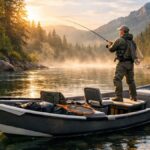
A fly fishing drift boat is a lightweight river boat designed to move with the current while being controlled by a rower. Unlike motorized boats, drift boats rely on oars to maneuver through currents, allowing anglers to position themselves perfectly for casting.
These boats are commonly used on trout rivers in North America but have become popular worldwide among fly fishing enthusiasts.
Key Characteristics of Drift Boats
-
Flat or slightly curved bottom for shallow water navigation
-
High sides for stability and safety in rapids
-
Oar-powered maneuverability
-
Raised casting platforms
-
Storage for gear, coolers, and tackle
The unique hull shape allows the boat to glide over shallow rocks and maintain stability even in moderate rapids.
Why Anglers Love Fishing from a Drift Boat
Fishing from a drift boat offers several advantages over traditional wading or shore fishing. Most importantly, it lets anglers cover more water efficiently.
Major Advantages
-
Access remote fishing locations
-
Drift quietly through prime trout habitat
-
Reach difficult river sections safely
-
Fish multiple river structures in one trip
-
Stay dry and comfortable during long sessions
Because the boat moves with the current, anglers can present flies naturally without disturbing fish.
Drift Boat vs Wading: Quick Comparison
| Feature | Drift Boat Fishing | Wading Fishing |
|---|---|---|
| River Coverage | Covers miles of river | Limited to small sections |
| Accessibility | Reaches remote spots | Restricted by terrain |
| Effort Required | Less physical strain | Physically demanding |
| Safety | Safer in deep currents | Higher risk in strong currents |
| Gear Capacity | Can carry coolers and equipment | Limited gear |
For anglers who want to maximize their time on the water, the drift boat is often the better choice.
Types of Fly Fishing Drift Boats
Not all drift boats are the same. Materials, design, and features vary depending on river conditions and angler preference.
Fiberglass Drift Boats
Fiberglass boats are among the most popular options.
Advantages include:
-
Smooth river performance
-
Quiet movement through water
-
Durable construction
-
Comfortable interior
However, they may require careful handling around sharp rocks.
Aluminum Drift Boats
These boats are extremely durable and ideal for rocky rivers.
Key benefits include:
-
High durability
-
Lower maintenance
-
Excellent longevity
-
Great for guides and frequent use
On the downside, aluminum boats can be noisier when hitting rocks.
Inflatable Drift Boats
Inflatable drift boats combine portability with functionality.
Benefits include:
-
Easy transportation
-
Lightweight design
-
Great for remote rivers
-
Compact storage
However, they may not track as smoothly as rigid boats in stronger currents.
Drift Boat Materials Comparison
| Boat Type | Best For | Durability | Weight | Maintenance |
|---|---|---|---|---|
| Fiberglass | Smooth rivers | Medium | Medium | Moderate |
| Aluminum | Rocky rivers | High | Heavy | Low |
| Inflatable | Remote trips | Medium | Light | Low |
Choosing the right boat depends largely on the rivers you plan to fish.
Essential Gear for Fly Fishing from a Drift Boat
Fishing from a boat requires a slightly different setup compared to wading.
Must-Have Equipment
-
Fly rods (typically 9 ft, 5–6 weight for trout)
-
Floating and sinking fly lines
-
Fly boxes with dry flies, nymphs, and streamers
-
Landing net
-
Waders or waterproof boots
-
Anchor system
-
Safety gear (life jackets, whistle)
Having organized storage inside the boat helps anglers quickly switch flies or rods when conditions change.
Helpful Boat Accessories
-
Rod holders
-
Cooler for drinks and fish storage
-
Dry bags for electronics
-
Fish finder (optional)
-
Anchor pulley system
Keeping gear organized ensures smooth fishing and prevents tangles or lost equipment.
Proven Drift Boat Fly Fishing Techniques
Fishing from a moving boat requires specific casting strategies. The goal is to present flies naturally while drifting downstream.
1. Bank Fishing Strategy
Most fish in rivers hold near structure along the banks.
Target areas include:
-
Undercut banks
-
Overhanging trees
-
Boulder pockets
-
Slow seams next to fast currents
Anglers typically cast toward the bank while the rower controls the boat’s speed.
2. Dead Drift Nymphing
Nymphing is one of the most productive techniques from a drift boat.
Steps include:
-
Cast upstream at a slight angle
-
Allow flies to drift naturally with current
-
Watch the indicator carefully
-
Set the hook immediately when it dips
This technique imitates drifting aquatic insects and often produces consistent strikes.
3. Streamer Fishing
Streamer fishing is ideal when targeting aggressive trout.
Common streamer retrieves include:
-
Strip retrieve
-
Swing method
-
Downstream drift
Large trout often chase streamers along deep river banks.
Best River Conditions for Drift Boat Fishing
While drift boats are versatile, certain river conditions produce the best results.
Ideal Conditions
-
Moderate river flow
-
Clear to slightly stained water
-
Consistent current seams
-
Defined riffles and pools
Challenging Conditions
-
Extremely low water levels
-
Flood-stage currents
-
Heavy debris or fallen trees
Experienced rowers can navigate most rivers, but safety should always come first.
Pros and Cons of Fly Fishing Drift Boats
Pros
-
Covers more river miles quickly
-
Access hard-to-reach trout water
-
Comfortable for long fishing days
-
Ideal for guided trips
-
Excellent for group fishing
Cons
-
Higher initial cost
-
Requires rowing skill
-
Needs vehicle shuttle logistics
-
Storage space required
Despite the challenges, many anglers find drift boats dramatically improve their fishing experience.
Common Mistakes When Fishing from a Drift Boat
Many beginners struggle with boat fishing simply because it requires different timing and positioning.
Frequent Errors
-
Casting too late as the boat passes structure
-
Poor communication between angler and rower
-
Using flies unsuited for river depth
-
Overcasting instead of short accurate presentations
-
Ignoring safety gear
Learning to anticipate the drift path is one of the most important skills.
Best Practices for Successful Drift Boat Trips
Successful drift boat fishing often comes down to preparation and teamwork.
Practical Tips
-
Communicate with the rower constantly
-
Keep casts short and accurate
-
Change flies frequently when fish aren’t biting
-
Stay organized inside the boat
-
Always wear a life jacket in fast water
Additionally, understanding river structure and trout behavior dramatically increases success rates.
Conclusion
A fly fishing drift boat opens the door to an entirely different level of river fishing. By allowing anglers to move naturally with the current and reach otherwise inaccessible water, drift boats provide unmatched opportunities for targeting trout and other river species.
While learning to fish effectively from a moving boat takes practice, the rewards are significant. With the right techniques, gear, and river knowledge, anglers can experience more productive days and explore rivers in ways that wading alone simply cannot match.
For many fly fishermen, a drift boat becomes more than just equipment—it becomes the ultimate tool for river adventure.
FAQ About Fly Fishing Drift Boats
What is a drift boat used for in fly fishing?
A drift boat is used to float downstream while anglers cast toward river banks and structures, allowing them to cover large sections of water efficiently.
Can beginners fish from a drift boat?
Yes. Many beginners start by fishing with experienced rowers or guides who control the boat while they focus on casting.
How many people fit in a drift boat?
Most drift boats comfortably hold two anglers and one rower.
Are drift boats safe on rivers?
Yes, when used correctly. Wearing life jackets and understanding river conditions are essential safety practices.
Do drift boats require motors?
No. Traditional drift boats are powered by oars and controlled by a rower.
Discover more fishing tips, expert angling techniques, and gear guides to improve your next catch — only on Kype Magazine.